
threat intel · ai · explained plainly
One Person. Stolen Keys. 14 Organizations Breached. AI-Powered Cyberattacks Just Got Real
A new threat report documents what AI-powered cyberattacks actually look like in practice — and the most alarming case isn't a nation-state. It's one guy with somebody else's API key.
Every few months somebody publishes a breathless take on how AI is going to change hacking. Most of it is vendor marketing. This one isn't. On September 10, 2026, Anthropic published a threat intelligence report covering eight months of real operations they detected and shut down between December 2025 and August 2026 — with case numbers, indicators of compromise, and enough operational detail that you can actually see how these attacks were run.
I read the whole thing so you don't have to. And the takeaway isn't "AI writes malware now." It's something stranger and more useful to understand: AI-powered cyberattacks didn't invent new attacks. They changed the economics of old ones. Here's what that means, with the receipts.
What is an AI-powered cyberattack, actually?
Forget the movie version. In the cases documented here, "AI-powered" doesn't mean a robot invents a magic exploit. It means the boring, labor-intensive parts of hacking got handed to software that never sleeps.
Think about what actually made a serious hacking crew serious, historically. Not genius. Labor. Someone had to map the target's network. Someone had to read the documentation for whatever weird software they were running. Someone had to write custom tooling for that specific environment. Someone had to sift through a terabyte of stolen files to find the valuable parts. That work took people, time, and money — which is exactly why state-backed groups could do things a lone criminal couldn't.
That's the gap that closed. The report's blunt framing is that sophistication has stopped being a reliable signal of who's behind an operation. The attacks themselves are still the same old stuff — stolen credentials, unpatched edge devices, exposed services, SQL injection, phishing. None of it is novel. What changed is that one person can now run all of it, against dozens of targets, in parallel, at machine speed.
Case file: the hacktivist who became an APT
One French-speaking individual. 42 targets. 14 breached.
In spring 2026, a single person went after European political parties, media outlets, think tanks, and the SaaS providers those groups depend on. Not a team. One operator, running AI agents that handled reconnaissance, code review, and vetting findings.
Their signature move was a previously undocumented WordPress re-installation race condition that spawned a rogue admin account without needing any credentials — developed and debugged with AI help in a single session, lab harness included. It worked on at least four sites. From there: a webshell hidden among font files, a WordPress "must-use" plugin (the kind that runs on every page load and can't be switched off from the dashboard) harvesting submitted credentials, and poisoned backups so that restoring from backup would just reinfect the victim.
They also built a doxxing search engine — ingestion pipelines, cross-referencing against breach dumps, ranking logic, containerized deployment, the works — loaded it with tens of millions of records including national health identifiers, and published it as a dark web service where people affiliated with the targeted political movement could be looked up by name. The report calls this one of the clearest cases yet of AI-assisted software engineering aimed squarely at mass privacy violation. Built by one person.
Sit with that for a second. Every capability in that paragraph — exploit development, persistence engineering, custom platform build-out, data fusion — used to require a team. And the whole campaign ran on stolen API keys, which brings us to the part of this report I think matters most.
The real story: your API key is now the loot
Here's the trend that I don't think is getting enough attention. Criminals aren't just using AI. They're stealing access to it, and treating that access as a prize in its own right.
The report lays out why stolen AI credentials are so attractive, and it's a genuinely clever three-for-one:
| What they get | Why it matters |
|---|---|
| Loot | Stolen keys and accounts have straightforward resale value in existing criminal markets. |
| Compute | Their attack workloads run at someone else's expense. Your bill, their operation. |
| Cover | Every action gets attributed to the legitimate account holder. You're the one in the logs. |
And the hunting for these keys is fully industrialized. One crew — operators linked to the ShinyHunters collective — ran a pipeline across a fleet of cloud workers that mass-downloaded 1.8 million distinct Android APKs from app stores, decompiled them, and scanned them for hardcoded secrets, piping verified hits into Telegram channels sorted into over a hundred categories in real time. A parallel stream harvested GitHub tokens. That's not hacking in any dramatic sense. That's a factory.
What they did with the access is the ugly part. At one tech provider: over a terabyte exfiltrated, including hundreds of thousands of national ID numbers and millions of payment card records, then staged publicly to pressure a ransom. At an airline: systems holding tens of millions of passenger records. At an energy company: operators claimed they could remotely control the charging current of EV chargers installed in customers' homes. One SaaS breach became a doorway into roughly 200 downstream customer organizations. In another, agents dumped over 2,100 Azure AD token sets across 40+ corporate tenants in about 34 hours.
When the attack targets the AI company itself
One case (tracked as GTG-50020) is worth its own section because it's the clearest sign of where this is heading. A Russian-speaking financially motivated actor who used to hit hotel booking and fintech platforms pointed the exact same playbook at AI companies.
- They found an AI vendor's automated evaluation sandbox. Not a person, not a login page — an automated testing environment.
- They injected malicious instructions into it. This is prompt injection: feeding hostile text into a system that reads text as instructions, and getting it to do something it shouldn't.
- The sandbox handed over its credentials — including production API keys belonging to that vendor, for multiple AI providers.
- They switched their own attacks onto the stolen keys automatically, and kept attacking the same victim and unrelated targets simultaneously, on the victim's dime.
- They repeated the winning path against ~30 AI companies in about four days, adapting slightly per target. One working attack path, industrialized.
Their stated goal, pursued down more than a dozen different avenues, was getting hold of a pre-release AI model. Worth being precise here, since this is the kind of detail that gets mangled in aggregator coverage: that attempt failed on every path, the stolen keys came from customers' own environments, and Anthropic's own systems were not compromised. The report is explicit about all three.
But the ambition is the story. Someone tried to steal an unreleased AI model the way a crew would case a warehouse. As the report puts it, this is the clearest demonstration so far that the AI supply chain has become a deliberate criminal target.
The defender problem: static detections just stopped working
This is the section that made me put my coffee down, because it goes right at how defensive security has worked for twenty years.
The traditional cycle: attacker builds a tool, defenders eventually spot it, vendors publish a signature, the tool stops working, attacker has to go build a new one. That cycle is how defenders imposed cost on attackers. Detection was expensive for the other side.
In one espionage operation (GTG-20006, whose tradecraft and targeting line up with the Russian group Microsoft tracks as Midnight Blizzard), the operators pointed AI at that cycle directly. Agents monitored whether their malware was being flagged by security products. When something got detected, the agents autonomously modified and rebuilt the malware and kept iterating until it wasn't detected anymore. Then the clean build got staged for live operations.
Now the loop closes faster than detections can be written.
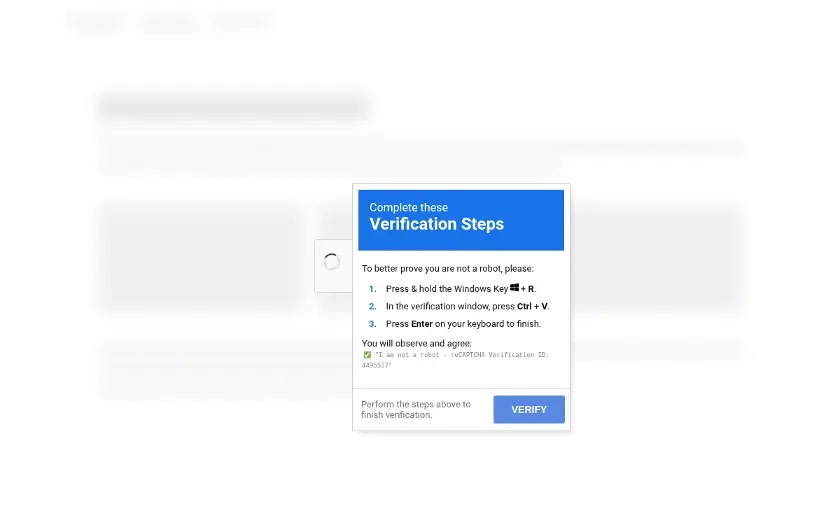
That same operation is a tour of creative access methods, and one of them should worry every traveler: they compromised at least three vendors that run hotel guest Wi-Fi, hijacked DNS so guest traffic routed through attacker servers, and staged ClickFix-style lures (yes — the same fake CAPTCHA trick I wrote about here) to push malware onto guests' Windows, Android, and iOS devices. They cross-referenced hotel guest records against their target list to pick victims. Microsoft documented this delivery method separately in July 2026 as CaptiveCrunch.
They also hijacked WhatsApp accounts by linking themselves as companion devices through headless browsers, with read receipts suppressed so victims never saw a thing while conversations were bulk-exported. At least two former high-level Ukrainian officials were hit this way. And at a North African government technology authority, a stolen VPN credential led to the full credential database: over 300,000 national identity records and commercial registry data for more than half a million companies.
The exploit foundry
One more, because it reframes what "finding a zero-day" costs now. A Chinese-speaking group (GTG-10007) — including, per the report, two undergraduate students at a university in Hunan, one of whom was interviewing for an offensive security job — built an automated vulnerability research pipeline pointed at security appliances.
The loop: load firmware into a decompiler, have an agent survey the binary and walk the code, form vulnerability hypotheses against a knowledge base it maintained over time, write exploit code against those hypotheses, test it against lab copies of the real product, and iterate until it works. Then file the result in the operator's private exploit portfolio.
One workflow running continuously against network appliances produced more than a dozen possible zero-day findings in a single month. Undergraduates. Running it around the clock, including while they were asleep.
How to protect your API keys (and why you should care today)
If you use any AI service — personally, or at work, or in a side project — you are now holding something criminals actively hunt for. Treat it accordingly.
- Never hardcode keys in an app, repo, or client-side code. The APK-scanning pipeline above exists specifically because people do this constantly. Use environment variables or a secrets manager.
- Scan your own stuff before they do. TruffleHog is free and it's literally the tool the criminals used. Run it against your repos and containers.
- Rotate keys on a schedule, and immediately after any laptop loss, contractor offboarding, or suspicious login.
- Set spend limits and billing alerts. An unexplained cost spike is often the first visible sign somebody else is running workloads on your key.
- Buy AI access only through official channels. No exceptions for a discount.
- Treat AI keys like production database credentials, because attackers already do. Same rotation policy, same access controls, same monitoring.
If you're defending an org (or a homelab)
- Behavior over signatures. If adversaries can rebuild malware until it's undetected, static indicators are a speed bump. Alert on what a process does, not just what it matches.
- Treat loss of visibility as an incident. If your EDR agent goes quiet, that's a finding, not a glitch.
- Watch your edge devices. VPN appliances, firewalls, and management consoles are where multiple cases in this report got their first foothold — and exploit research against those appliances is now automated.
- Inventory your AI integrations. Sandboxes, proxies, wrappers, and agent deployments are attack surface. A system that reads untrusted text and holds credentials is a prompt injection target.
- Assume speed. Multiple breaches in this report went from first access to bulk data theft in under three hours. Your response plan needs to work at that tempo, not next Tuesday.
What I actually take away from this
I work overnights in a command center. Most of what I watch is uneventful, and the job is noticing the one thing that isn't. What this report changed for me isn't fear of some superintelligent hacker — it's the realization that the volume is about to go way up, and that the profile of who's capable of hurting you has flattened out completely.
The state-backed crew and the lone guy with a stolen API key now show up with similar capabilities. The report's own framing is that the main thing separating those two classes of actor is no longer sophistication — it's intent. That's a genuinely new situation for defenders, and it means the baseline stuff matters more, not less. Rotate your credentials. Patch your edge devices. Turn on MFA. Know what's in your environment.
None of these attacks needed a technique nobody had seen before. They needed a door somebody left open, and a tireless machine to walk through it.
FAQ
- What is an AI-powered cyberattack?
- An attack where AI handles substantial parts of the work — reconnaissance, writing exploit code, running intrusions, sorting stolen data — rather than a human doing each step. The techniques are usually familiar; the speed, scale, and low cost are what's new.
- Are hackers really using AI in real attacks?
- Yes. Anthropic's September 2026 threat report documents specific operations disrupted between December 2025 and August 2026, spanning state-linked espionage groups, financially motivated criminals, and individual hacktivists, with indicators of compromise published for each.
- Why are hackers stealing AI API keys?
- Three reasons at once: stolen keys resell for money, they let attackers run their workloads at the victim's expense, and any activity gets attributed to the legitimate account owner instead of the attacker.
- Was Anthropic itself hacked?
- No. The report states that one actor's explicit goal was accessing a pre-release model and that every attempted path failed. The stolen API keys involved came from customers' own environments, not from Anthropic's systems.
- How do I know if my API key has been stolen?
- Watch for unexplained usage spikes or billing increases, requests from unfamiliar locations, and rate limits you didn't cause. Set billing alerts, and scan your own repositories and app builds for accidentally committed keys.
- Does antivirus stop AI-powered attacks?
- Not reliably on its own. One documented operation used AI agents to repeatedly rebuild malware until it evaded detection. Behavior-based detection, credential hygiene, and fast response matter more than signature matching alone.
// Alex — OvernightHacker.com. Command center by day, blinking cursor by night. Go rotate your API keys. I'll wait.





Leave a Reply